Anatomy of a phenibut container label
How an unregulated compound is packaged and marketed, and what the label does not say
Last reviewed
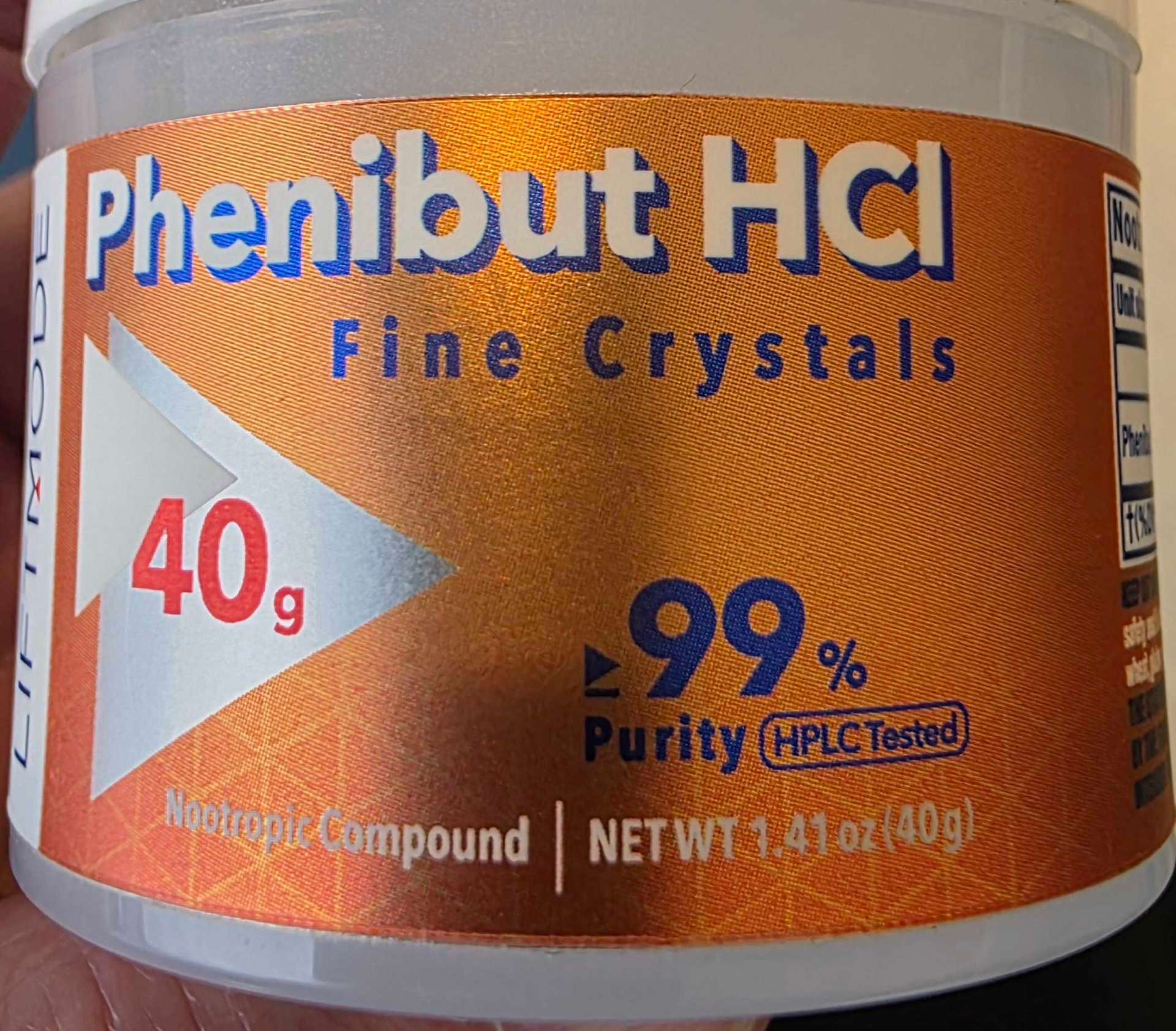
Label Analysis
- •Product Name: "Phenibut HCl Fine Crystals" - using scientific terminology to appear legitimate
- •Container size: a bulk quantity, sold by weight the way a food ingredient is, with nothing on the label indicating how much of it constitutes a single use
- •Purity Claim: "≥99% Purity (HPLC Tested)" - suggesting laboratory testing for quality, appealing to consumers seeking "pure" products
- •Marketing Term: "Nootropic Compound" - avoids medical claims while suggesting cognitive enhancement benefits
What's Missing From The Label
- •No Warning Labels: No mention of potential for dependence, withdrawal effects, or overdose risks
- •No Dosage Instructions: No clear guidelines on safe dosing, frequency limitations, or maximum daily intake
- •No Contraindications: No information about who should avoid using the product (e.g., pregnant women, people with certain medical conditions)
- •No Interaction Warnings: No mention of dangerous interactions with alcohol, benzodiazepines, opioids, or other substances
FDA Regulatory Status
Phenibut is not approved by the FDA for any medical use in the United States. It is nonetheless sold widely online, often as a "nootropic" or "research chemical." The FDA has stated that phenibut does not meet the legal definition of a dietary ingredient and, in 2019, issued warning letters to companies marketing it as a dietary supplement — meaning such products are misbranded, not lawfully marketed.
Source: FDA, Phenibut in Dietary Supplements (opens in a new tab).
Why This Matters
The marketing of phenibut as shown in this container exemplifies how potentially dangerous substances can be sold without adequate warnings or safety information. The scientific terminology, purity claims, and professional-looking packaging can give consumers a false sense of safety about a substance that carries significant health risks.
According to CDC surveillance of U.S. poison-center data, there were 1,320 reported phenibut exposures between 2009 and 2019, with a sharp increase during 2015–2019. Poison-center reports are calls, not confirmed diagnoses, and cannot by themselves establish what caused the increase.